The Liberation of Apeldoorn
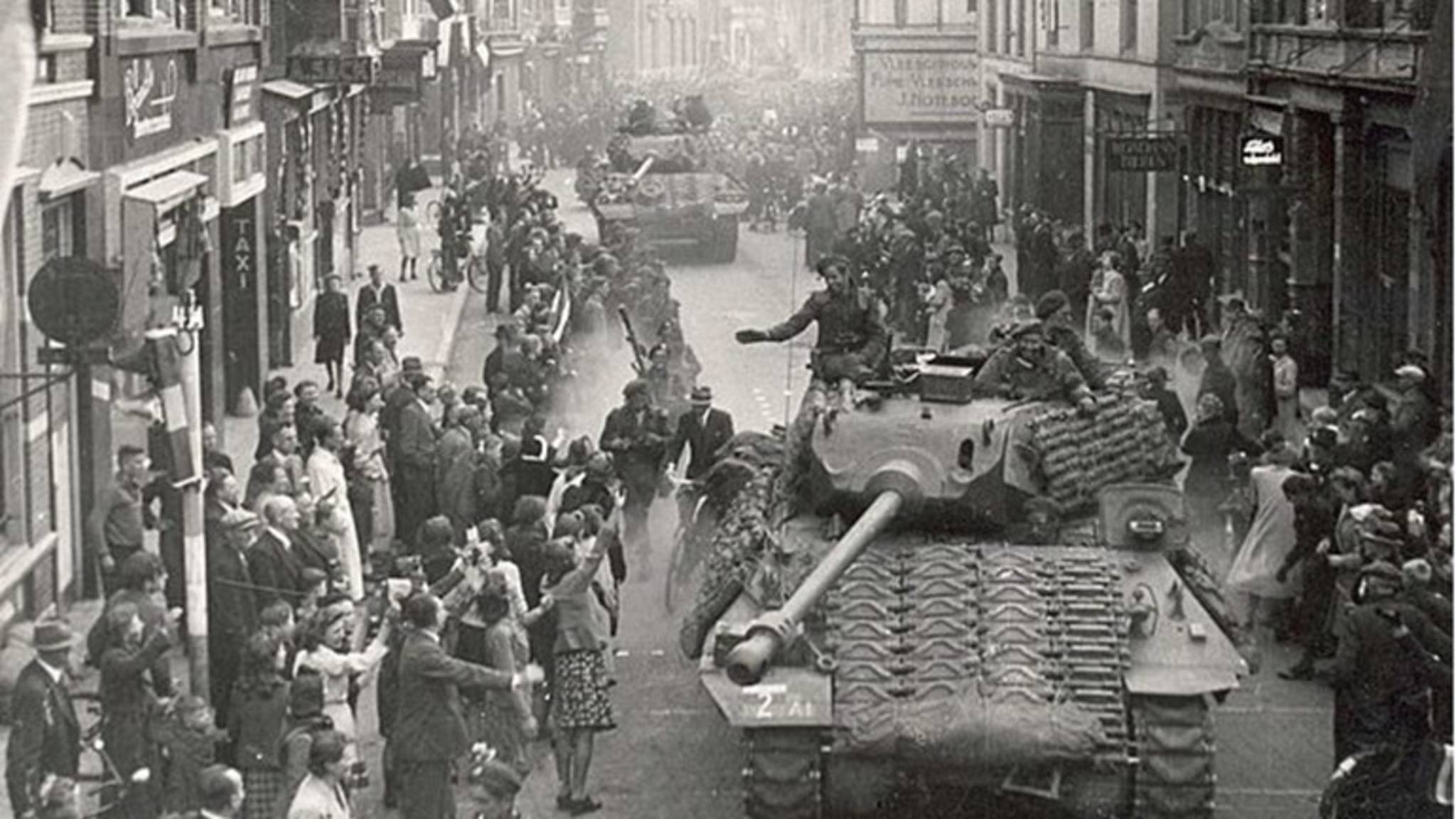
The liberation of Apeldoorn was accomplished by the 1st Canadian Infantry Division, which consisted of three brigades and supporting division troops. The brigades were each comprised of three infantry battalions with armoured reinforcement (1st Hussars and Three Rivers Regiment) and backed by own-division artillery and engineers.
The liberation of Apeldoorn by the Canadian Army Corps was assigned to the 1st Canadian Infantry Division under the command of Lieutenant-General Simonds.
This Division, comprising of approx. 18,000 troops, consisted of three infantry brigades, four artillery battalions cannons and an engineers battalion (building bridges, road repairs, removing obstacles), with tank reinforcement by the 6th Armoured Regiment, 1st Hussars and 12th Armoured Regiment, Three Rivers Regiment) .
The 1st Infantry Brigade consisted of three battalions (approx. 850 men each):
The Royal Canadian Regiment
The Hastings and Prince Edward Regiment
48th Highlanders of Canada
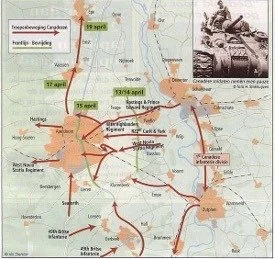
The 1st Infantry Brigade crossed the IJssel River after the 2nd Brigade and fought fiercely near Wilp, de Hoven, Twello and Teuge, where, at Wilp, the 48th Highlanders sadly lost their Commander Lt-Col MacKenzie and 20 troops, before liberating Apeldoorn on April 17, 1945.
The battalions of the 2nd Infantry Brigade:
Princess Patricia's Canadian Light Infantry
The Seaforth Highlanders of Canada
Loyal Edmonton Regiment
The 2nd Infantry Brigade crossed the IJssel River near Gorssel on April 11, 1945 and took control of the west bank of the river. The 1st and 3rd Brigades, after crossing the IJssel, pursued a more southerly route. The Patricia’s pressed ahead and finally liberated Oosterhuizen, Lieren and Beekbergen on April 17, 1945.
The following regiments of the 3rd Infantry Brigade were engaged in the fight:
Royal 22nd Régiment (French-speaking)
Carleton and York Regiment
West Nova Scotia Regiment
They operated south of the 1st Brigade, attacking via Posterenk and Wilp to liberate Ugchelen and Apeldoorn South.
On April 12th, after a successful crossing of the IJssel River, the 1st Canadian Army Corps resumed command of the 1st Canadian Infantry Division. This was the division that liberated Apeldoorn and the region on April 17, 1945, and from thereon advanced due west.The 1st Canadian Army Corps went on to liberate the western part of the Netherlands. The Germans finally surrendered in the Netherlands on May 5, 1945, in Wageningen, to Lieutenant-General Foulkes, Commander of the 1st Canadian Army Corps, in the presence of H.R.H. Prince Bernhard.
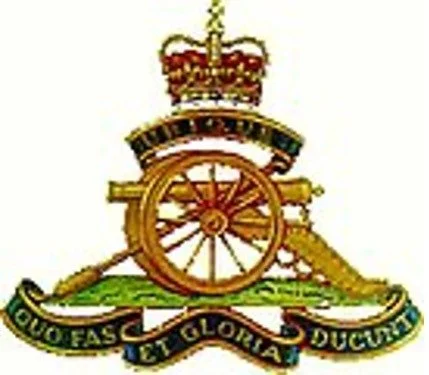
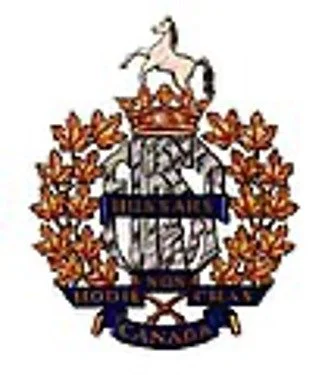
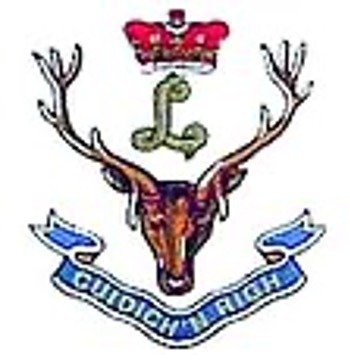
Canadian Regiments that played a role in liberating Apeldoorn

Organisation of the 1st Canadian Infantry Division
The machine gun battalion of the division:
Saskatoon Light Infantry (from Saskatoon, central Canada)
The three battalions of the 1st Brigade:
The Royal Canadian Regiment (Petawawa, west of Ottawa)
The Hastings & Prince Edwards Regiment (Belleville, between Toronto and Ottawa)
48th Highlanders of Canada (Toronto)
The battalions of the 2nd Brigade:
Princess Patricia's Canadian Light Infantry (Calgary, central Canada)
Loyal Edmonton Regiment (Edmonton, central Canada)
The Seaforth Highlanders of Canada (Vancouver, West Canada)
The three battalions of the 3rd Brigade:
Royal 22nd Régiment (Saint Gabriel de Valcartier, East Canada)
Carleton & York Regiment (Carleton, East Canada, near Nova Scotia)
West Nova Scotia Regiment (Nova Scotia, peninsula in East Canada)
The supporting armoured battalions:
1st Hussars (London, Ontario)
Three Rivers Regiment (Trois Rivieres, Quebec, East Canada)
The artillery and engineers battalions of the division:
Royal Canadian Artillery (Guelph, near Toronto)
Royal Canadian Engineers. (Chilliwack, West Canada)
By World War II, the army regiment had ceased to fulfil its tactical role, however, the tradition of the army units continued to be respected, especially to encourage the bonding between the men serving in the regiments. Canadian military traditions closely followed the British military hierarchy.
British regiments were recruited regionally, and this was reflected in the naming of the regiments. It was the same in Canada. Examples are the West Nova Scotia Regiment, the Saskatoon Light Infantry, and the Loyal Edmonton Regiment. Canadians of Scottish descent served in the 48th Highlanders of Canada or The Seaforth Highlanders. French-Canadians joined the 22me Régiment Canadian Français.
Royalty and members of the aristocracy, too, were identified in the naming of regiments, for example, the Princess Patricia’s Canadian Light Infantry and The Royal Canadian Regiment. The official emblems of the Royal Canadian Artillery (RCA) and Royal Canadian Engineers (RCE) are identical to those seen in the British artillery and engineers regiments. In addition, the Canadian engineers carry their own emblem in which a golden beaver – symbol of stamina – is central. The nation’s bilingual culture is evidenced by the words ENGINEERS and GENIE in the emblem.
Next to the official names of the regiments, a plethora of nicknames were in circulation:
"The Red Patch Devils" for the 1st Canadian Infantry Division, after the red emblem on their sleeves and the soldiers’ fighting spirit;
The Royal Canadian Regiment: the "Royals";
The Hastings & Prince Edwards Regiment were known as either the "Plough Jockeys" or "Hasty P’s" for short.
48th Highlanders of Canada were known as the "Glamour Boys"
Once, upon an inspection of the troops by King George VI of England, the regiment was unable to obtain khaki puttees, and appeared in blue putties instead. The King was pleased at the sight and henceforth allowed the regiment to wear blue: the regiment’s nickname was born. Their Commanding Officer, disliking the fit of khaki gaiters (like spats covering the tops of boots) because of their poor fit, had issued his troops blue puttees. Then, during an inspection by King George VI of England, and knowing the puttees were not authorized, he drew the King’s attention to them. His Majesty commented “They are very smart” and authorization followed promptly: the regiment’s nickname was born.
Princess Patricia’s Canadian Light Infantry were the "Patricia’s";
The Seaforth Highlanders of Canada, simply, were the "Seaforth";
The Loyal Edmonton Regiment, in a term of endearment, were called the "Loyal Eddie’s";
The number 22 ("vingt deux") of the Royal 22me Régiment was corrupted in English-Canadian slang, reducing the regiment to the "Van-Doo’s";
The West Nova Scotia Regiment enjoyed the nickname of "West Novies".
The liberation of Apeldoorn is commemorated in many places in the wider Apeldoorn region, as shown in the examples below:
Wilp
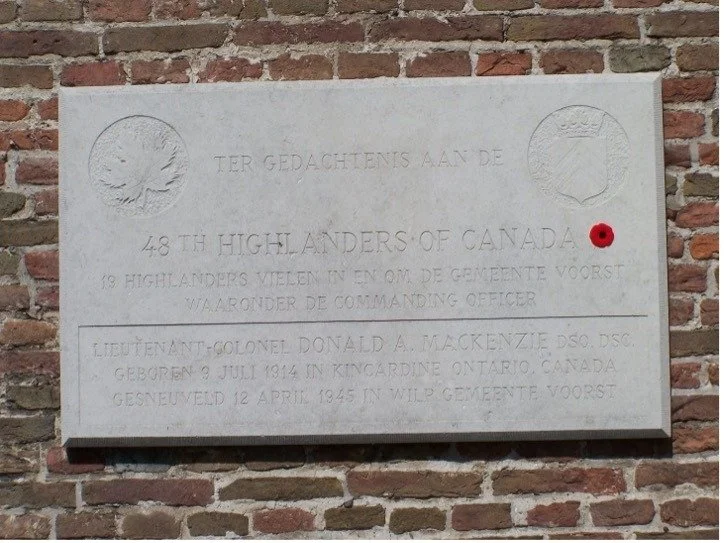
Location: The plaque is found on the facing wall of the church at the Kerkstraat in Wilp (municipality of Voorst).
Text: The text reads:
IN MEMORY OF
48th HIGHLANDERS OF CANADA
19 HIGHLANDERS LOST THEIR LIVES IN AND AROUND THE MUNICIPALITY OF VOORST,
INCLUDING THEIR COMMANDING OFFICER.
LIEUTENANT-COLONEL DONALD A. MACKENZIE DSO. DSC.
BORN JULY 9, 1914 IN KINCARDINE ONTARIO, CANADA
KILLED IN ACTION APRIL 12, 1945, IN WILP, MUNICIPALITY OF VOORST.
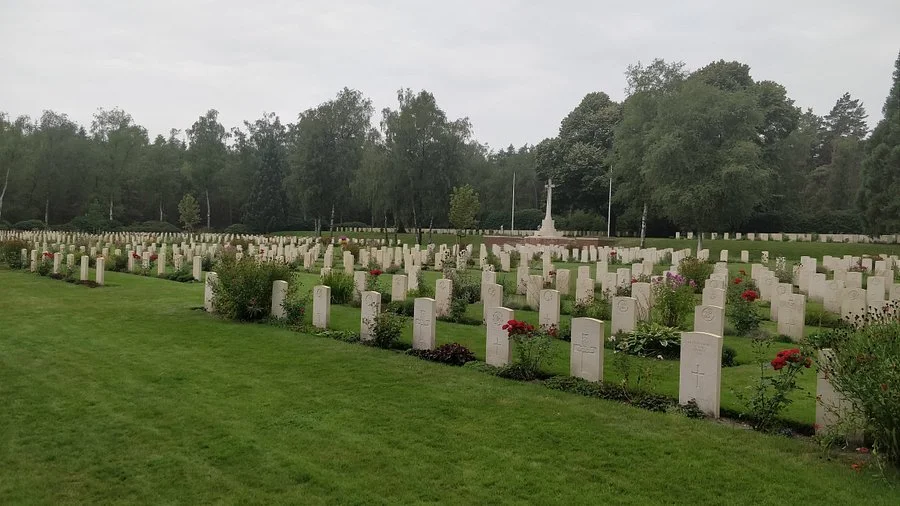
Holten, Canadian War Cemetery
The Holten War Cemetery: final resting place of 48th Highlanders killed in battle near Wilp. Each year on April 12, or the first Sunday thereafter, a commemoration takes place.
Apeldoorn
Location: Near the lock in the Apeldoorn Canal at Apeldoorn, north of the Deventerbrug (Deventer bridge)
Date of Commemoration: April 17, 1945
The Story Behind the Monument: By this small lock in the canal, not far from the Deventerbrug, lays a memorial stone in the bank of the canal, reminding of the events of April 16-17, 1945. During those two days, the city of Apeldoorn barely escaped intense Canadian artillery fire in the battle over the Apeldoorn Canal. Two members of the resistance, Gijs Numan and Albert van de Scheur, protected Apeldoorn from a heavy shelling.
On Friday, April 13th, the Canadians had reached Twello and were advancing in the direction of Teuge. As the Canadians pressed onward in the direction of Apeldoorn, there were intense gunfire exchanges with German troops stationed near the railway crossing south-west of Teuge. It was the support of five tanks that swayed the balance in favour of the Canadians, who were then able to advance until approx. 2 kilometres from Apeldoorn.
During the night of Friday/Saturday, April 13-14, a Canadian infantry company, riding on tanks, tried to reach the bridge (Broeksbrug) over the canal in a single run. However, at 5.15 am- just 50 meters short of their mission- the bridge was blown up with a thunder, right before their eyes.
Early that same Saturday morning, other Canadians has attempted but failed to gain control over the crossing at Deventerstraat - Zutphenseweg (de Tol). They would only succeed much later in seizing the crossing. Similarly, repeated attacks on the Deventerbrug, early on Sunday, were ill-fated with two men killed, four heavily injured, and two tanks destroyed.
Throughout the entire day on Sunday, fierce clashes ensued in the attempts to approach the canal; finally, towards the evening, the canal was reached at Zevenhuizen. However, breaking through enemy fire in order to reach the Deventerbrug and the crossing, 400 m further south, proved impossible, even for other Canadian troops.
The Canadian commanders, considering the failed assaults and increasing German resistance, concluded the city would likely be defended by at least 3,000 German parachutists. Nothing was further from the truth: the Germans were retreating from the city. The advance of the British troops from Arnhem proceeded quickly and threatened to cut off the Germans.
The Canadians, oblivious to these facts, were planning a large-scale assault on Apeldoorn after an initial barrage of artillery fire. The commander of the Binnenlandse Strijdkrachten (the (war-time) Domestic Force(s) in the Netherlands) in Apeldoorn, Gijs Numan, learned about the plan. Fast action was needed to protect the city from coming under heavy fire.
In a basement near the Deventer Bridge, a group of German soldiers were lodged, with instructions to blow up the bridge when the Canadians arrived. Numan and several others had convinced them to surrender; the Germans handed over their weapons and were detained in the basement.
In the night of April 16-17, 1945, Gijs Numan and his guide, Albert van der Scheur, crossed the canal at the lock near the Vlijtseweg. It was a hazardous undertaking; the two men slithering into the night, creeping silently across a moonlit no-man’s-land. When, suddenly, a Canadian guard appeared from behind a hedge, the men were able to convince the soldier of their good intentions, and were escorted to a command post. The commander, however, refused to accept what he was told, convinced there must surely be 3,000 German troops ensconced in Apeldoorn, and insisting he would take the city under broad artillery fire to save lives among his own ranks.
Gijs Numan offered to bring out the captured Germans, and went back, escorted by three Canadian volunteers. After having interrogated the Germans, the commander decided to suspend the planned artillery assault on the city, and instead to stage a silent attack in the night. In single file, 100 Canadians followed Gijs Numan across the lock, with boots wrapped in socks to muffle the sound of marching. More Canadian troops followed, taking covered positions in anticipation of the signal ordering all-out attack. Still, the Canadians were not entirely convinced the Germans had left.
In the early morning of April 17, Gijs Numan shot off 3 signal flares, signalling that the coast was clear. A tremendous noise filled the Deventerstraat. Tanks rolled in, and the liberation of Apeldoorn had begun! In the early morning, around 04.30 hrs, the Canadians were firmly in control of the eastern flank of the city. Immediately after, the Canadian commander issued orders to the remaining regiments to enter the city at sunrise. By mid-morning, the north-west flank and the city center of Apeldoorn were liberated. At approx. 09.00 hrs. the first troops reached Palace Het Loo. Less than a half hour later, the Dutch flag was hoisted over the balcony.
Apeldoorn had been liberated.
Oosterhuizen
Date of Commemoration: April 16, 1945
The Story Behind the Monument: At the "dorpshuis" (community centre) in Oosterhuizen a stone with a black plaque is displayed. As in Lieren, the plaque honours the Princess Patricia’s Canadian Light Infantry (PPCLI). Only the dates differ: April 16, 1945, In Lieren: April 17, 1945.
On Monday, April 16, 1945, Canadian troops marched on both banks of the canal from the direction of Eerbeek, meeting practically no resistance from the Germans. On reaching Veldhuizen they found the bridge destroyed. Still, the Canadians were able to hold both banks of the canal, and at once seized the opportunity to press on and liberate Apeldoorn from the south. With rolling stock and heavy equipment still east of the canal, repairing the bridge was crucial. The Canadian brigade commander despatched both his remaining battalions – including the PPCLI – to the site.
On the evening of April 16, 1945, several Canadians were sent to verify if the situation in Oosterhuizen was safe for the others to cross the canal. These men formed a scouting patrol dispatched by the PPCLI. At that stage, no more Germans had been reported in the area.
By early morning, April 17, the engineers had replaced the destroyed crossover with a Bailey bridge, and the rest of the Canadian infantry brigade was able to cross the canal. The PPCLI took positions near Oosterhuizen and Lieren; the others assumed positions north of Loenen, near the Vrijenberg.

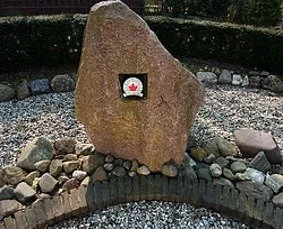
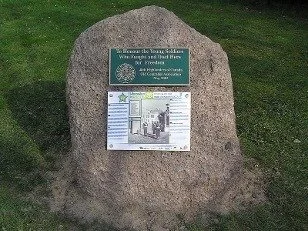
Boulder Stone at Lieren
Date of Commemoration: April 17, 1945
The Story Behind the Monument: In Lieren, in the Church grounds, a boulder stone with a memorial plaque can be found. The text on the memorial refers to the actions of the Canadian military of the
Princess Patricia’s Canadian Light Infantry (PPCLI)
battalion. This battalion formed part of the 2nd Canadian Infantry Brigade, which, in order to advance, needed to cross the canal south of Apeldoorn, reaching the villages of Oosterhuizen, Lieren and Beekbergen before advancing into Apeldoorn. This was the strategy that was to support the liberation of Apeldoorn by the other Canadian troops, approaching via Teuge. On April 16, the Canadians took the ‘BODEN’ bridgehead near Veldhuizen.
Due to the expeditious advance of the British from Westervoort towards Apeldoorn, and the Canadian armoured division heading from Arnhem towards Otterlo, the Germans were faced being cut off near Apeldoorn. Consequently, they were forced to surrender their defences west of the Apeldoorn canal in the night of April 16-17, 1945. This paved the way for the Patricia’s to liberate the three villages, without meeting with any resistance, on April 17, 1945.
National Canadian Liberation Monument: The Man with Two Hats
Location: Apeldoorn, Koning Lodewijklaan, opposite de Naald, and Ottawa, Dow’s Lake
Unveiled: Apeldoorn, May 2, 2000 and Ottawa, May 11, 2002, by H.R.H Princess Margriet
Remembrance Day: The official day of commemoration in the English-speaking world is the Sunday nearest to November 11. November 11, 1918, is the date on which the truce that marked the end of the First World War, was signed between the allied forces and Germany.
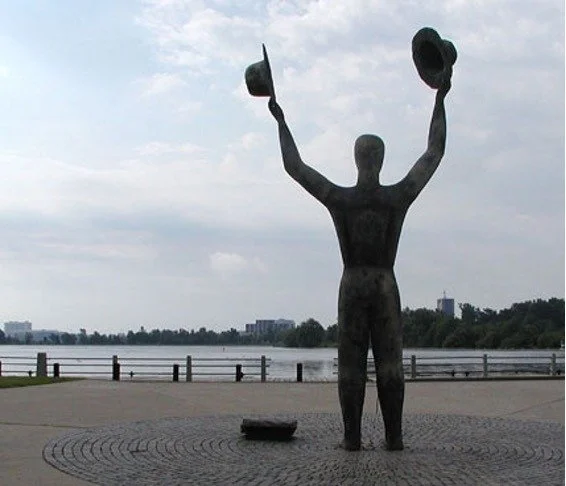
The Story Behind the Monument: In Apeldoorn, on the Koning Lodewijklaan, opposite the ‘Naald’, stands a slightly mysterious bronze figure, hands up, towering over four metres tall, waving two hats. His two giant feet do not rest on a pedestal but on a tiled plateau with an inlay in the form of a maple leaf. This is the National Canadian Liberation Monument.
Large parts of the Netherlands were liberated by the Canadian armed forces. Each year, this fact is commemorated in many villages and cities. Apeldoorn has maintained a special bond with Canada, moreover, since the Royal Palace’ het Loo’ was the Canadians’ last headquarters at the end of World War II. For the Canadians, the liberation of our nation came at a cost of almost 6,000 lives sacrificed. As an expression of gratitude, a major national parade has taken place in Apeldoorn, every five years since 1980, in honour of our veterans. For many years these parades were a vibrant, living monument, attesting Apeldoorn’s gratitude for our Canadian liberators. In 1995, in view of the age of the veterans, it was resolved that perhaps the time had come to consider a lasting monument.
The location was decided with equal resolve: opposite Palace Het Loo. The statue was unveiled on May 2, 2000. The monument is a symbol of opposites: the euphoria of being liberated, the sadness of so many lives lost; peace and war, Canada and the Netherlands, welcome and farewell, past and future.
On May 11, 2002, a twin monument was unveiled in Ottawa. The two sculptures can be seen as two sides of a collective experience, expressing the strong bonds between the two countries.
In front of the Man with two Hats lies a bronze plaque, presented by the Canadian government to the people of the Netherlands in 2005. In English, French and Dutch, the text reads as follows:
"Canada brought liberty and life to the Netherlands at the end of the Second World War. Between October 1944 and May 1945, with fierce fighting and heavy loss of life, the Canadian military opened the Schelde estuary and the port of Antwerp to Allied supplies, cleared much of the country of the enemy, and fed the Dutch people left starving by the Nazi occupiers. On May 5, 1945, in Wageningen, the Germans surrendered to Canadian Lieutenant-General Charles Foulkes and H.R.H. Prince Bernhard of the Netherlands, commander of the Dutch forces. The bonds forged between Canada and the Netherlands stand strong to this day.
The formal presentation of the plaque to the Netherlands took place on May 6, 2005, on the forecourt of Palace Het Loo. The definitive installation (and second unveiling) at the National Canadian Liberation Monument took place during 'Remembrance Day' on Sunday, November 13, 2005.
Close to the “Man with Two Hats” a "luistersteen" (audio stone) has been placed which today forms part of the Liberation Route. A plaque is attached to the stone, presented by veterans of the 48th Highlanders of Canada in 2005.
You can learn more about this monument HERE.